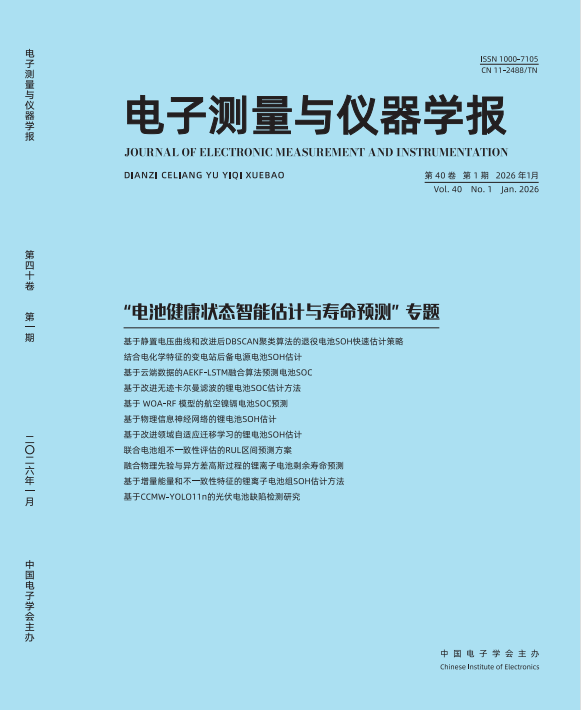
• Volume 39,Issue 7,2025 Table of Contents
    Select All
    Display Type: |
    • >Expert Forum
    • Research progress of passive intermodulation interference suppression methods for communication systems

      2025, 39(7):1-12.

      Abstract (497) HTML (0) PDF 10.62 M (398) Comment (0) Favorites

      Abstract:With the rapid development of communication technology, the inevitable trend in the development of communication systems is high power, wide bandwidth, and multi-carrier technology. However, passive intermodulation generated by passive devices exists widely in the communication system. Once the intermodulation products fall into the receiving band, the whole system will be interrupted. This phenomenon restricts the development of communication systems to the direction, which is equipped with large bandwidth, large capacity, and high power. Therefore, it is necessary to focus on the suppression method of intermodulation products in practical engineering applications. This paper comprehensively analyses the signal characteristics of passive intermodulation interference in different communication scenarios, such as space communication, air-based, ship, and ground, starting from the sources and characteristics of passive intermodulation and combining with the background of 6G air, sky, land and sea integrated communication. Existing intermodulation interference suppression methods are summarised from two major aspects of passive and active interference suppression, based on traditional band planning, process optimization, and device structure optimization, and expanded to advanced suppression methods such as non-contact design, analog suppression, signal processing and machine learning suppression, which provide ideas and solutions for the subsequent resolution of intermodulation interference. Finally, the development trend of passive intermodulation interference suppression technology is summarised.

    • >Electronic Measurement Technology and Equipment
    • Chip delay parameter measurement based on dynamic selection unit and anti-metastability TDCs

      2025, 39(7):13-22.

      Abstract (406) HTML (0) PDF 8.75 M (309) Comment (0) Favorites

      Abstract:The core of AC parameter testing lies in chip delay measurement, with the continuous scaling of semiconductor processes and exponential growth of circuit complexity, even minor delay defects can now induce critical timing failures. The necessitates implementing high-precision dynamic parameter testing schemes on automatic test equipment (ATE). To address this requirement, a hybrid FPGA-based measurement architecture has been proposed: A dynamic selection unit combining timing logic control and combinational logic achieves high-precision, high flexibility signal capture. With a three-chain time-to-digital converter (TDC) based on Nutt interpolation methodology, incorporating a phase-shifted-clock-calibrated coarse measurement arbitration module and a CARRY4-cascaded fine measurement module. Significant errors in coarse measurement data induced by metastability phenomena within asynchronous circuits were eliminated through this structural configuration, while versatile compatibility with multiple measurement scenarios was preserved. Dynamic parameter quantification capabilities encompassing rise/fall time, pulse width, transmission delay, and frequency were achieved by synergistic interactions between the selection unit and TDC core, achieving concurrent nanosecond-level measurement velocity and picosecond-level resolution. The TDC resolution achieved on Kintex-7 is 12.019 ps, with a differential nonlinearity (DNL) of [-0.80 LSB,4.67 LSB], an integral nonlinearity (INL) of [-3.82 LSB,5.02 LSB], and a root-mean-square accuracy of 23.363 ps. Functional verification under practical measurement conditions and stability assessment protocols were implemented, with operational robustness in real-world applications being conclusively demonstrated.

    • Design of dual-mode detection system for cellular imaging and electrical measurements

      2025, 39(7):23-31.

      Abstract (364) HTML (0) PDF 15.36 M (246) Comment (0) Favorites

      Abstract:The morphological and electrophysiological characteristics of cells are a key focus in life science research. However, traditional single-modal detection systems, which can only measure a single parameter, struggle to fully reveal the complex physiological responses of cells. Multi-modal detection technology, which has the capability to simultaneously measure multiple parameters, is gaining attention. Yet, existing systems face challenges in balancing multi-modality, large field of view, and high resolution, while also finding it difficult to achieve real-time detection. To address these issues, this study developed a novel dual-modal imaging and electrical monitoring technology. Through an innovatively designed imaging-electrical dual-modal chip, it enables real-time imaging and electrical signal detection of cells. The specific technology includes the design of a dual-modal imaging-electrical chip that integrates lensless microscopy imaging chips with microelectrode arrays through “heterogeneous packaging,” with the chip’s field of view covering more than 90% of the chip area. Additionally, a detection system was constructed, integrating an imaging control system based on field-programmable gate arrays and a multifunctional electrical signal processing system. Experimental validation showed that this system effectively monitors co-cultures of cortical neurons from C57 mouse embryos and glioma GL261 cells, demonstrating good real-time performance and comprehensive detection capabilities. This technology provides an innovative solution for comprehensive physiological monitoring of cells and holds promising potential for application in life science research and clinical practice.

    • Real-time spectrum analysis method based on Zoom-FFT algorithm

      2025, 39(7):32-44.

      Abstract (455) HTML (0) PDF 9.84 M (307) Comment (0) Favorites

      Abstract:With the increasing demand for real-time processing and high resolution in modern communication and signal processing systems, the inherent trade-off between frequency resolution and bandwidth in traditional FFT-based spectral analysis has become increasingly evident, making it challenging to simultaneously achieve rapid processing and high-precision analysis. To address this issue, this paper proposes a real-time spectral analysis method based on the Zoom-FFT algorithm. The proposed approach leverages a localized spectral refinement technique to perform high-resolution spectral analysis while reducing computational complexity and satisfying real-time requirements. In this method, the target frequency band is first down-converted to baseband using digital down-conversion. Multistage decimation filtering, incorporating both low-pass filtering and down-sampling, compresses the data while preserving essential spectral features. Subsequently, a localized high-resolution FFT is applied to the decimated signal, which enhances the detection capability for weak signals. An overlapping frame technique is also introduced to mitigate spectral leakage and improve the spectrum update rate. The method is ultimately implemented and validated on FPGA hardware. Experimental results indicate that, at a sampling rate of 250 MHz, the proposed method achieves a frequency resolution of 1 kHz for a signal with a 50 kHz bandwidth, while the FPGA’s parallel architecture further improves data processing efficiency. This integrated approach of innovative signal processing and hardware acceleration provides an effective solution for high-real-time and high-precision spectral analysis in applications such as communication signal monitoring and radar pulse analysis.

    • Design of uncooled infrared video processing system based on ZYNQ platform

      2025, 39(7):45-53.

      Abstract (427) HTML (0) PDF 10.70 M (271) Comment (0) Favorites

      Abstract:Aiming at the problems of high background noise, low contrast and poor portability of PC-based video acquisition system in uncooled infrared camera images, a ZYNQ fully programmable system-on-chip-based infrared video acquisition system is proposed in this paper. By integrating many image processing algorithms such as histogram equalization, kernel norm minimization and one-dimensional guide filtering, the system can improve image contrast and effectively suppress noise. In order to accelerate the processing speed, the system uses histogram pseudo-equalization method to optimize the computational efficiency of histogram equalization, and designs an efficient filter module architecture for kernel norm minimization and onedimensional guided filtering, which realizes high-speed parallel processing of the two filtering methods. The experimental results show that the proposed infrared video acquisition system can increase the roughness, RMS contrast and information entropy to 17.4 times, 3.15 times and 2.16 times of the original image, respectively, and significantly improve the visual effect and detail performance of the infrared image. The ZYNQ-based design is not only highly integrated, but also has a fast processing speed to meet the needs of real-time processing. Compared with the traditional PC platform, the system has significant advantages in portability, power consumption and cost, and provides an efficient and reliable solution for the practical application of infrared video acquisition technology.

    • Self-tuning method for optimal control parameters based on adaptive output current

      2025, 39(7):54-62.

      Abstract (334) HTML (0) PDF 6.89 M (239) Comment (0) Favorites

      Abstract:new low-ripple adjustable DC power supply; control parameter optimization; multi-objective artificial hummingbird optimization algorithm; parameter self-tuning method

    • Dual-mode true random number generator with dynamic switching of multiple entropy sources

      2025, 39(7):63-72.

      Abstract (324) HTML (0) PDF 6.64 M (215) Comment (0) Favorites

      Abstract:True random number generators (TRNGs) play a critical role in information security. While the Galois ring oscillator-based TRNG (GARO-TRNG) represents a classical design architecture, it typically suffers from issues of fixed points or periodic oscillations. To address these limitations, this paper proposes a novel FPGA-based DMRO-TRNG structure with multiple entropy sources incorporating clock jitter, metastability, and chaos. Distinct from conventional GARO architectures, this dynamic TRNG design implements mode switching through MUX, enabling transitions between different operational modes to generate random output sequences. The implementation utilizes Xilinx compiler for automatic place-and-route, effectively enhancing comprehensive performance in random number generation. Experimental evaluations on Xilinx Kintex-7 and Artix-7 FPGAs demonstrate that the generated random sequences successfully pass rigorous standard tests including NIST SP800-22, NIST SP800-90B, and TESTU01. The architecture exhibits exceptional robustness under varying voltage and temperature conditions through extensive testing. With low hardware overhead, this TRNG achieves a throughput of 750 Mbps while consuming only 36 LUTs, 4 DFFs, and 16 MUXs, requiring merely a simple XOR-based post-processing circuit.

    • Design of ferrous shot flow measurement and control instrument

      2025, 39(7):73-80.

      Abstract (288) HTML (0) PDF 7.09 M (253) Comment (0) Favorites

      Abstract:As a widely adopted surface strengthening technique for metals, shot blasting treatment can effectively enhances material fatigue resistance and extends service life by inducing compressive residual stresses through high-velocity shot impacts. To achieve precise measurement and control of the steel shot flow in shot blasting machine, a ferrous shot flow measurement and control device with integrated detection and control capabilities has been developed. The principle of ferrous shot flow detection was analyzed based on electromagnetic field theory, and an equivalent model describing the influence of ferrous shot flow on the magnetic field distribution characteristics of the solenoid sensor was established. This principle was validated through finite element simulation. The LDC1612 inductance-to-digital conversion circuit was adopted in the detection, data acquisition of ferrous shot flow rate was achieved based on the LC parallel resonance and the measurement noise was eliminated via a periodic average value filtering algorithm. The controller generates control signals based on the collected flow data through PID operation, while the control unit dynamically adjusts the duty cycle of the generated PWM signal to regulate the opening and closing time of the solenoid valve, thereby the closed-loop control of the shot flow was achieved. Experimental results demonstrated a linear relationship between the S330 and S110 shot flows and the difference in LC resonant frequency, as well as a two-segment linear relationship between the shot flow and the duty cycle of the PWM signal, with a fitting accuracy exceeding 99.2%. The detection accuracy for the S330 shot flow reaches ±2.5%, and for the S110 shot flow, it reaches ±4.33%, the excellent metrological performance of this integrated measurement and control system was confirmed.

    • Screening method for multi parameter consistency of chips

      2025, 39(7):81-87.

      Abstract (366) HTML (0) PDF 7.03 M (254) Comment (0) Favorites

      Abstract:Due to manufacturing process deviations, some parameter values of chips have large discreteness. In order to improve the stability and reliability of electronic systems, this paper designs a multi parameter low correlation clustering selection (MLCS) algorithm to enhance chip consistency. The algorithm first calculates the Spearman rank correlation coefficient between parameters, selects test parameters with low correlation for screening, improves the efficiency of selection, and then uses 1D K-means method to perform 3-level clustering on multiple parameters. Based on their classification results, chips concentrated in the cluster center are selected. The experimental results show that the algorithm can achieve automatic screening of test chips. The parameter values of chips located in the middle cluster center are all around the mean, with no deviation of one variance, and the classification boundary is clear. The clustering effect is not limited by the number of screening parameters; 894 samples were screened according to 2 parameters, and the scatter plot showed significantly better results than conventional 2D fuzzy clustering and 2D K-means algorithm; The time taken is about 0.04 seconds, while the fuzzy clustering algorithm takes over 12 seconds. This algorithm has good adaptability and can effectively select chips with multiple parameter values that are close to the mean.

    • Correlated color temperature model and dimming control of white LED system based on spectral compensation

      2025, 39(7):88-97.

      Abstract (329) HTML (0) PDF 6.18 M (219) Comment (0) Favorites

      Abstract:Phosphor-converted(PC)white LEDs have relative fixed spectral structures, with much blue spectrum but less red and green components. As a result, their correlated color temperature (CCT) is difficult to adjust and generally high, accompanied by an insufficient color rendering index (CRI). For this reason, tunable white LED systems are constructed based on spectral compensation, which improves the spectral continuity and uniformity in the visible light range, thus to obtain the dynamic tunability of CCT and enhancement of CRI. Combined with the photo-electro-thermal characteristics analysis of LED devices, a nonlinear dynamic relationship model of CCT is established. This model allows for quick prediction of CCT for the mixed spectra under given electric driving states, and in reverse enabling driving control according to target CCTs. In verified experiments, the nonlinear dynamic relationship model of CCT can accurately predict CCTs with errors of no more than 4.5%. In terms of dimming for target CCTs, errors between actual CCTs and their target ones are less than 1.5%, with CRI upgrade rates exceeding 5% and even reaching up to 18.51%. All the experiment results suggest that spectral compensation is a feasible approach to optimize the spectral structure of PC white LEDs, in this way to achieve dimming control with an enhanced CRI, effectively improving lighting quality and applicability.

    • Study on acoustic imaging device and its performance for detecting micro-leakage of submarine gas pipeline

      2025, 39(7):98-106.

      Abstract (297) HTML (0) PDF 9.88 M (226) Comment (0) Favorites

      Abstract:Micro leakage detection of subsea gas pipelines is crucial for the safety of marine engineering. Acoustic imaging instruments are an important means of detecting micro leaks in underwater gas pipelines. However, traditional techniques have insufficient detection accuracy in complex shallow water environments, making it difficult to identify micro leaks early. Therefore, this article designs a high-precision underwater acoustic imaging instrument based on multi beam forward-looking acoustic imaging technology. By utilizing the statistical differences between echo and reverberation, echo and noise in the echo domain, the separation of echo and interference signals is achieved, and the intensity characteristics of pipelines and leakage areas are obtained from the echo domain. This instrument can use the fusion processing of echo domain and image domain to detect micro leaks, and estimate the leakage amount based on the degree of bubbles and leakage speed. The experimental results show that the designed and developed acoustic imaging instrument can determine the density of bubbles, detect micro leaks of bubbles, and locate the location of micro leaks. For situations where there is a jet state, the pressure is 3 MPa, the leakage aperture is 0.5 mm, and the micro leakage amount is much less than 0.5%, this instrument can perform clear detection at a distance of 10 m. It has great potential applications in the field of micro leak detection in submarine pipelines and underwater production systems.

    • Design of high-speed TDI camera for diffraction flow cytometry

      2025, 39(7):107-114.

      Abstract (384) HTML (0) PDF 7.79 M (260) Comment (0) Favorites

      Abstract:Our research group has previously developed a novel label-free flow cytometry method based on diffractive imaging, which utilizes a time delay integration (TDI) camera to capture diffraction images and employs machine learning algorithms for cell identification. However, the detection throughput is limited by the scanning frequency of the TDI camera. To address this limitation, we designed an TDI camera optimization scheme to increase the scanning frequency and verify its practical effectiveness. In this study, we optimized the timing control of the TDI camera, successfully increasing its scanning frequency from 50 kHz to 100 kHz. In the validation experiments, after capturing diffraction images with the optimized camera, we extracted feature values using the Gray-level co-occurrence matrix (GLCM) and conducted machine learning training with support vector machine (SVM) and random forest (RF) classifiers. The classifiers were used to distinguish between cultured normal liver cells and hepatocarcinoma HepG2 cells, and to classify three lung cancer cell lines (A549, NCI-H378, and NCI-H446) in a three-class identification task, achieving test set recognition accuracies of 94.14% and 95.20%, respectively. Our optimized system not only doubled the cell flow rate but also ensured the acquisition of images that meet the recognition requirements. This innovation provides a novel technical support for high-speed imaging, with significant scientific and practical value.

    • Design of misalignment-tolerant magnetic induction coupler for AUV wireless charging system

      2025, 39(7):115-127.

      Abstract (322) HTML (0) PDF 11.06 M (230) Comment (0) Favorites

      Abstract:To address the issues of misalignment and unstable transmission power and efficiency in complex environments for Autonomous Underwater Vehicle wireless charging systems, a magnetic induction coupling wireless charging system featuring high misalignment tolerance is proposed. The magnetic core and coil structures are designed to optimize the magnetic path. Compared with existing systems, it has better space efficiency, magnetic field control, and anti-misalignment performance. A compensation network for the system is selected based on anti-misalignment performance. The constant current output performance is evaluated through controlled source model. The ZVS method is applied in parameter design to minimize extra losses. Simulation results show that the wireless charging system maintains coupling coefficient attenuation within 20% for lateral offsets of 20 mm and longitudinal offsets of 15 mm, and within 15% for rotational offsets of 15°. The output current fluctuation remains within 10% when the load is increased by ten times. The magnetic coupling structure was fabricated, and the coupling coefficient attenuation remains within 25% under misalignment in all directions. The hardware experiment was conducted, with experimental results showing 83% transmission efficiency at 10 Ω load with 25 V input voltage. When subjected to maximum design-range offsets in various directions, the system maintains transmission power above 70% of its peak value while sustaining transmission efficiency exceeding 70%.

    • Scheduling method for complex measurement task based on sparrow search algorithm

      2025, 39(7):128-139.

      Abstract (358) HTML (0) PDF 15.17 M (228) Comment (0) Favorites

      Abstract:The large and complex electromechanical equipment is more and more widely used in aerospace, remote sensing and intelligent manufacturing industries. A real-time scheduling method for complex measurement task based on improved sparrow search algorithm is proposed to address the real-time measurement problem of status information of large and complex electromechanical equipment during storage and transportation, especially the complex scheduling issue for measurement processes. Firstly, the initial population of sparrows is initialized using a combination of tent chaos mapping and reverse learning to enhance the quality of initial solutions. Subsequently, the information exchange mechanism of the grey wolf optimization algorithm is introduced to improve the explorer search strategy and enhance algorithm global search capability. Finally, the sine-cosine mechanism is combined with the follower position update process and the variable neighborhood search is carried out to improve the convergence speed of the scheduling algorithm and prevent the algorithm from falling into the local optimal. In order to verify the comprehensive performance of the scheduling method, a large number of comparative experiments are conducted. The experimental results indicate that the proposed method reduces the system computation time by 14.3% and optimizes the maximum completion time by 46.6% compared with the traditional method, which validates its effectiveness and stability in the scheduling of complex measurement tasks.

    • Railway defect segmentation network with multi-level attention and multi-scale information fusion

      2025, 39(7):140-150.

      Abstract (378) HTML (0) PDF 11.52 M (238) Comment (0) Favorites

      Abstract:Railway defect detection faces many challenges. The complex texture of the railway surface, background noise interference is serious, making it difficult to detect defects; defects of various types, different morphology, resulting in the traditional detection methods are difficult to capture all the details of the features at the same time; smaller defects due to the characteristics of the characteristics are not obvious, often missed. To address these issues, this paper proposes a novel semantic segmentation network that integrates a multi-level parallel attention mechanism and multi-scale information fusion to enhance defect segmentation accuracy. In the encoder, feature extraction and encoding efficiency are improved by leveraging stacked Inverted Bottleneck Convolutions and Fused Inverted Bottleneck Convolutions. The decoder incorporates a multi-level parallel pixel attention module (PAM) to enable the network to effectively focus on and localize defect regions amidst considerable background noise. Additionally, a pyramid pooling module (PPM) is introduced to capture multi-scale contextual information, enhancing the model’s ability to extract both local and global features. A multi-scale spatial information fusion strategy further integrates the outputs of PAM and PPM, maximizing the utilization of feature representations across different levels. Experimental evaluations on the NRSD-MN dataset demonstrate that the proposed method achieves mPA values of 0.836 4 and 0.725 8 and mIoU scores of 0.685 8 and 0.634 2 on the Craft and Real data subsets, respectively. The results confirm that the proposed network outperforms existing models in railway track surface defect segmentation, offering superior accuracy and robustness.

    • Effect of copper film on thermal stress distribution and electrical properties of flexible electronic composite films under thermal load

      2025, 39(7):151-158.

      Abstract (306) HTML (0) PDF 8.83 M (283) Comment (0) Favorites

      Abstract:To quantitatively characterize the effects of copper film layers on the strain distribution and electrical properties of flexible electronic composite films under thermal loading, this study establishes an integrated testing system comprising a thermal deformation test workstation based on digital image correlation and an electrical testing station. First, two-dimensional horseshoe-shaped flexible electronic composite films with copper conductive layers of 50, 100, 200, and 500 nm thickness are prepared on flexible polymers via magnetron sputtering. In-situ and global deformation detection and electrical signal stability testing of the films are conducted under constant-rate heating conditions. The thermal strain fields of the two-dimensional horseshoe-shaped interconnections are extracted, with particular emphasis on analyzing the strain field characteristics per unit area near the copper film layers. The results show that the 500 nm-thick copper film layer exhibits the optimal compatibility with the substrate under thermal loading, leading to a stable overall strain trend in the sample. Electrical signal acquisition via the electrical testing station reveals that as the copper film thickness increases, the resistance of the 500 nm sample relaxes to 3 Ω and maintains excellent operational stability under sustained temperature loading. In conclusion, this study reveals the effects of different metal layer thicknesses on the thermal strain at the substrate-metal interface and signal transmission efficiency of flexible electronic composite films through the established thermal loading testing system. Experiments demonstrate the performance advantages of the 500 nm copper film layer sample under thermal loading, providing a theoretical basis for the safety design of stretchable electronic components.

    • Life prediction of electromagnetic relays based on GWO-BiLSTM

      2025, 39(7):159-170.

      Abstract (473) HTML (0) PDF 9.91 M (211) Comment (0) Favorites

      Abstract:To address the current issues in relay life prediction where the correlation between degradation states is underutilized and manual parameter tuning is inefficient, this study proposes an electromagnetic relay life prediction method based on the grey wolf optimizer (GWO) and bidirectional long short-term memory (BiLSTM) network. First, an accelerated degradation experiment platform for electromagnetic relays is constructed to collect full service-life data, from which the mean time to failure is derived. The data is then sampled, partitioned, and normalized, with four key feature parameters—coil resistance, load current, contact resistance, and release time—selected as model inputs using Pearson correlation analysis. Subsequently, the root mean squared error (RMSE) between predicted and actual relay life is employed as the fitness function for the GWO algorithm, optimizing the number of hidden layer neurons, dropout rate, and initial learning rate of the BiLSTM model. The prediction model is reconstructed using the optimal parameter combination. Experimental validation demonstrates that the proposed GWO-BiLSTM model achieves average reductions of 56.7% in RMSE and 58.2% in MAPE compared to conventional back-propagation neural network (BPNN), gated recurrent unit (GRU), and long short-term memory (LSTM) models, effectively enhancing the prediction accuracy of electromagnetic relay service life.

    • CCM-YOLO: An improved component detection method for dense regions of circuit boards

      2025, 39(7):171-179.

      Abstract (479) HTML (0) PDF 9.40 M (251) Comment (0) Favorites

      Abstract:In this paper, YOLOv5 is used as a benchmark model to address the problem of easy leakage and low accuracy of electronic components detection on circuit boards. The leakage problem of the model in detection is improved by using the convolutional block attention module (CBAM) to enhance the detection accuracy in the process of feature extraction and improving the boundary regression loss function. Firstly, the feature information of components is extracted using convolutional layers. Secondly, the CBAM module is introduced into the path aggregation network (PANet), which enriches the feature information of components and improves the problem of lower accuracy of the model. Finally, accurate detection of components of different scales is achieved by multi-scale prediction and adaptive anchor frames. The experimental results show that the improved CCM-YOLO algorithm achieves a mean average precision (mAP) value of 96.8% on the homemade dataset, and it achieves a leakage detection rate of 4.5%, which is an improvement of 8.3% value compared to the 88.8% of the mean average precision of the YOLOv5 network, and the leakage detection rate is reduced from 13.7% of the original baseline model is reduced by 9.2%. Therefore, the algorithm in this paper effectively improves the detection accuracy and significantly reduces the leakage detection, providing an effective detection scheme for component detection.

    • Fixed-time tracking control of high-speed train based on distributed observer

      2025, 39(7):180-191.

      Abstract (405) HTML (0) PDF 9.39 M (228) Comment (0) Favorites

      Abstract:Considering the problems of uncertainties and external disturbances during the operation of high-speed train (HST), a fixed-time non-singular terminal sliding mode control method based on the distributed observer is proposed to track a given target speed quickly, accurately, and stably. First, the multi-agent model of HST is constructed by according to the force situation during the actual operation of the train. Secondly, the terminal sliding mode surface is selected and combined with the double power reaching law to design the fixed-time terminal sliding mode controller for the leader vehicle. Since there is no direct communication between some of the follower vehicles and the leader vehicle in HST, the position and speed of the leader vehicle cannot be obtained. A distributed fixed-time observer is designed to observe the state information of the leader vehicle. While, the non-singular terminal sliding mode surface is used to design the fixed-time non-singular terminal sliding mode controller for the follower vehicles. By Lyapunov stability theory, it proves that the designed observer and controller can be stabilized in a fixed time, respectively. Finally, the simulation is carried out with the parameters of CRH-type trains. under the condition of introducing external disturbances. The method is utilized to compare with the sliding-mode consistency method. The results show that the proposed algorithm can enable the follower vehicles to track the target velocity profile quickly and accurately with the velocity error within -2×10⁻⁶~2×10⁻⁶ m/s, and with strong robustness compared with the sliding mode consistency method.

    • Gray image detection algorithm integrating double observation and attention mechanism

      2025, 39(7):192-202.

      Abstract (375) HTML (0) PDF 9.36 M (228) Comment (0) Favorites

      Abstract:Owing to the constraint of the single-channel structure of gray images, the target contrast within the image is low, the feature information is indistinct, and the color information is lacking. Hence, the detection accuracy is low and the detection process is arduous. To enhance the accuracy of gray image detection and reduce the rates of false detection and missed detection, an object detection algorithm, SAC-YOLO, combining dual observation and attention mechanism was proposed. Firstly, transform atrous convolution was integrated into the backbone network to convert the standard convolution layer into an atrous convolution layer, and the global context module was combined to enhance the model’s accuracy in processing information of different scales and complexities. Secondly, the feature fusion part employs an efficient multi-scale attention mechanism to recalibrate the weight of each channel by encoding global information and interactively captures the pixel-level relationship in gray images across latitudes. Finally, a super-resolution reconstruction detection head was added, and a receptive field attention module and a convolution module were constructed to focus on the spatial information within the receptive field and provide effective attention weights for the large-size convolution kernel, enabling the model to adapt and represent the characteristics of small target information in gray images more precisely. The comparison experiment in the NEU-DET dataset reveals that the recognition accuracy of the improved YOLOv8 algorithm for gray image information attains 79.3%, which is 3.1% higher than that of the original YOLOv8 network. It can be observed from the visualization experiment that the issue of false detection and missed detection has been alleviated. The above experimental results indicate that SAC-YOLO has an excellent detection effect and can achieve high-quality detection in grayscale image scenarios.

    • Method for measuring the characteristics of small cone-hole with large aspect ratio based on diffraction theory

      2025, 39(7):203-211.

      Abstract (261) HTML (0) PDF 9.57 M (230) Comment (0) Favorites

      Abstract:In order to measure the small cone-hole with a large aspect ratio, the diffraction measurement technology of cone-hole is studied. Based on the basic principles of light wave transmission and diffraction in geometric optics and physical optics, this paper explores the forming mechanism of light spot with small cone hole with large aspect ratio. By constructing the mathematical model of laser diffraction with small cone hole with aspect ratio, the relationship between the image features of spot and the characteristics of small cone hole is analyzed, and the formula for solving the taper and diameter of small cone hole is established. In the research process, the rationality of establishing the mathematical model was demonstrated by comparing the taper and diameter calculated with the parameters set by the model, and the experimental platform was built to carry out the laser transmission micro-hole test experiment. The light intensity distribution curve was extracted by using the spot image obtained by the shooting, and the taper and diameter values were calculated according to the solution formula of the micro-taper and diameter. The results show that the variation trend of the light intensity curve calculated based on the mathematical model of spot diffraction is basically the same as that of the actual light intensity curve. The measurement errors of the taper and diameter of the tiny cone hole with an aspect ratio of 66.67 are 1.35% and 2.78%, respectively. The measurement results have good accuracy, which verifies the feasibility of the measurement method proposed in the paper.

    • Research on multi-scene key target detection method for coal mine based on machine vision

      2025, 39(7):212-226.

      Abstract (371) HTML (0) PDF 24.92 M (272) Comment (0) Favorites

      Abstract:Aiming at the problem of poor target detection of operating personnel and equipment due to high dust, low illumination, human-machine multi-target mixing and cross-scale changes in the complex operation scene of coal mine underground, we propose a multi-scene key target detection method based on machine vision for coal mine. Firstly, the YOLOv5s algorithm is optimised using CGNet (context guided network) feature extraction module, SlimNeck feature fusion module with Dyhead dynamic detection head in order to construct the YOLOv5s-CSD network model. Secondly, based on the self-constructed coal mine dataset, ablation experiments, comparison experiments and embedded detection experiments were carried out around the YOLOv5s-CSD model. The experimental results show that YOLOv5s-CSD achieves a detection accuracy of 91.0% in four complex operation scenarios of underground coal mine tunneling, anchor support, coal mining, and auxiliary transport, which is 3.5% higher than YOLOv5s algorithm, and compared with six mainstream target detection algorithms, such as YOLOv9s, YOLOv11s, and YOLOv12s, it has the moderate model complexity and the highest detection accuracy. On the experimental test platform, the real-time detection accuracy of YOLOv5s-CSD model for seven types of key targets, such as person, support, and electric locomotive, is above 90.0%, and its real-time detection speed is up to 38.6 frames/s, which is high in detection accuracy and real-time, and it can provide technical support for the visual dynamic perception of the complex environment of underground coal mines.

    • Bearing preload control based on fuzzy PID controller optimized by NRBO algorithm

      2025, 39(7):227-235.

      Abstract (316) HTML (0) PDF 5.96 M (191) Comment (0) Favorites

      Abstract:Appropriate preload can make the bearing system achieve the purpose of reducing system vibration and noise and improving bearing stiffness. In order to meet the needs of bearing preload control, a preload control strategy based on NRBO algorithm to optimize fuzzy PID is proposed. Firstly, the hydraulic loading method of bearing preload is determined and the transfer function is established. Secondly, combined with the co-simulation model of AMESim/Smilink, and compared with conventional PID, fuzzy PID, PSO optimized fuzzy PID. Finally, the experimental verification is carried out. The simulation results show that the overshoot of fuzzy PID optimized by NRBO algorithm is reduced by 42.93%, 27.78% and 13.91% respectively compared with conventional PID, fuzzy PID and PSO algorithm, and the adjustment time is reduced by 3, 2.3 and 1.6 s respectively. The test results show that under the radial force of light load, medium load and heavy load, compared with the conventional PID controller, the NRBO optimized fuzzy PID controller reduces the adjustment time by 5.3, 10.4 and 4.5 s respectively, and the overshoot is reduced by 43.78%, 52.52% and 72.36% respectively. Compared with the fuzzy PID controller, the adjustment time is reduced by 2.7, 5.2 and 2.6 s respectively, and the overshoot is reduced by 29.62%, 46.24% and 59.52% respectively. Compared with the PSO algorithm to optimize the fuzzy PID controller, the adjustment time is reduced by 1.7, 3.2, 2.3 s, and the overshoot is reduced by 17.38%, 30.02%, and 55.42%, respectively. It shows that the NRBO optimized fuzzy PID controller has faster and more accurate control effect, and can achieve accurate application of preload.
    • Research on odor source localization of UAVs in 3D environments

      2025, 39(7):236-246.

      Abstract (261) HTML (0) PDF 6.87 M (187) Comment (0) Favorites

      Abstract:In order to enhance the odor source localization capability of unmanned aerial vehicles (UAVs) in three-dimensional environments, a crowding factor-elitist strategy improved sparrow search algorithm (CE-SSA) is proposed. This algorithm incorporates elite strategy, crowding factor, and L-vy flight perturbation mechanisms to improve search capability and effectively avoid local optima. In the experiments, the diffusion of the odor plume in a 3D space was simulated, and the performance of CE-SSA was compared with that of the classical particle swarm optimization (PSO) and the original sparrow search algorithm (SSA). The results show that, in the case of a single UAV, CE-SSA reduces localization error by over 98% compared to traditional algorithms and increases the success rate by more than 56%. When the number of UAVs reaches four or more, the localization error stabilizes below 0.2 meters, with a success rate of 100%. Moreover, CE-SSA demonstrates strong robustness under different odor plume characteristics and can handle complex environmental variations. The study indicates that CE-SSA offers significant advantages in improving localization accuracy and success rate, providing a reliable solution for UAVbased odor source tracking in complex environments. The findings of this research provide theoretical support for the further development of active olfactory technology and expand the potential applications of UAVs in environmental monitoring and disaster response.

    • Design and implementation of an online detection instrument for tetrahydrothiophene concentration in gas pipeline networks

      2025, 39(7):247-258.

      Abstract (243) HTML (0) PDF 9.22 M (216) Comment (0) Favorites

      Abstract:Gas odorization is an important step in ensuring the safe use and transportation of gas. It is directly related to whether users can detect gas leaks in the first time. Online detection of tetrahydrothiophene concentration in the gas pipeline network is very important to ensure that the concentration of odorants at the user end is qualified. This article focuses on the problem of online detection of tetrahydrothiophene concentration in gas pipeline networks. A low-cost and high reliability online detection instrument is designed with MSP430 as the control core and electrochemical sensors as the detection method. Firstly, the cross interference characteristics of electrochemical sensors in detecting mixed gases were analyzed, and a mathematical model of cross interference was established. An optimization scheme was proposed to address the disadvantage of electrochemical sensors being prone to poisoning during online detection. Secondly, the hardware and software parts of the detector were developed. In addition, the detector adopts a dual explosion-proof housing design to ensure its safe use in gas environments. Finally, calibration and performance verification experiments were conducted on the detector in a laboratory environment, and a comparison experiment with a gas chromatograph was completed on site. The experimental results show that there is a good linear relationship between the true value and the measured value of the tetrahydrothiophene online detector designed, and the degree index R2 of the linear trend fitting is 0.996. The detector has shown good response performance in response time, Stability, repeatability, high and low temperature alternation, and the influence of gas source pressure test in the calibration experiment, with a range drift of 0.7%, repeatability RSD of 1.88%, indication error of 1.10%, and detection accuracy of 4.0 level. It can realize accurate measurement of tetrahydrothiophene concentration under gas environment with pressure 0.1~0.3 MPa and temperature -10 ℃~40 ℃. To solve the problem of gas pipe network tetrahydrothiophene concentration detection provides a scientific and reliable basis and means to ensure the safe operation of the gas pipe network and gas users’ life and property safety is of great significance.

    • Path planning based on improved beetle swarm optimization algorithm and cubic spline interpolation

      2025, 39(7):259-268.

      Abstract (246) HTML (0) PDF 8.23 M (245) Comment (0) Favorites

      Abstract:To address the optimization requirements in mobile robot path planning and enhance the performance limitations of the beetle swarm optimization algorithm regarding convergence precision and application scope, this paper introduces an adaptive elite mutation-based beetle swarm optimization (AEM-BSO) algorithm. The methodological innovations manifest in three principal aspects. Firstly, the implementation of good point set initialization ensures uniform population distribution, effectively mitigating the risk of local optima entrapment. Subsequently, a non-linearly decreasing inertia weight strategy enhances global exploration capabilities during initial iterations while accelerating convergence rates in later stages.Furthermore,incorporation of elite mutation mechanisms that strategically perturb high-performing individuals during iterative processes to prevent premature convergence.For practical implementation in mobile robot navigation, cubic spline interpolation optimizes waypoint connections in generated paths, ensuring kinematic feasibility and smooth trajectory formation.Comprehensive validation across 10 benchmark functions and diverse environmental maps demonstrates the algorithm’s superior optimization precision and robust stability.Experimental comparisons reveal that AEM-BSO achieves respective path length reductions of 0.24%, 18.12%, and 8.41% compared to primitive BSO, PSO and BA, accompanied by significant standard deviation decreases of 25.8%, 96.73%, and 14.13%.These quantitative improvements substantiate the proposed algorithm’s effectiveness in balancing exploration-exploitation trade-offs and enhancing solution quality for complex path planning tasks.

Editor in chief:Prof. Peng Xiyuan

Edited and Published by:Journal of Electronic Measurement and Instrumentation

International standard number:ISSN 1000-7105

Unified domestic issue:CN 11-2488/TN

Domestic postal code:80-403

  • Most Read
  • Most Cited
  • Most Downloaded
Press search
Search term
From To