• Volume 39,Issue 11,2025 Table of Contents
    Select All
    Display Type: |
    • Research on multi-sensor fusion SLAM algorithm in dynamic scenes Wu YonghaoLi ShengZou Wencheng

      2025, 39(11):1-10.

      Abstract (219) HTML (0) PDF 15.04 M (5893) Comment (0) Favorites

      Abstract:To address the challenges of robot trajectory drift in dynamic and complex environments, and overcome the limitations of conventional static map construction, we propose a robust multi-sensor fusion SLAM algorithm integrated with dynamic point cloud removal. Our front-end processing employs IMU pre-integration to compensate for point cloud distortion and utilizes an iterative error state Kalman filter (IESKF) for refined initial pose estimation. Furthermore, we introduce a novel dynamic point cloud removal strategy that combines ground segmentation with spatio-temporal normal vector analysis. It effectively eliminates moving objects and preserves static structures to ensure global map consistency. On the back end, our method leverages factor graph optimization, fusing laser-inertial odometry, IMU pre-integration, and wheel encoder data to enhance trajectory estimation. In addition, we incorporate ground plane constraints to suppress cumulative errors and mitigate z-axis drift. Experimental validation in a complex campus environment demonstrates that our method significantly reduces positioning root mean square error (RMSE) by 46.2%, 49.4%, and 35.9% compared to LeGO-LOAM, FAST-LIO, and LIO-SAM, respectively. Moreover, our method successfully removes dynamic point clouds from the constructed maps, showcasing superior robustness in dynamic scenarios. These advancements provide reliable support for autonomous robot navigation and high-precision mapping in complex dynamic environments.

    • Research on self-validation of temperature sensor status for stator winding of wind turbine

      2025, 39(11):11-22.

      Abstract (97) HTML (0) PDF 3.42 M (112) Comment (0) Favorites

      Abstract:In order to improve the operational reliability of wind turbines in smart wind farms and the self-confirmation of sensor status, a novel self-validation method for sensor status is proposed using the stator winding temperature sensor of wind turbines as an example. First, based on grey relational analysis theory, and utilizing sensor correlation and information fusion technology, the grey correlation degree between the abnormal stator winding temperature sensor of a specific wind field and the same type of sensor on the same machine is calculated to achieve sensor anomaly state recognition. Second, using Pearson correlation and expert system judgment, parameters with strong correlation to the stator winding temperature sensor are identified. A long short-term memory (LSTM) multi-parameter input, single-output abnormal data reconstruction model is then established and optimized using the sparrow search algorithm (SSA) to improve the model’s accuracy. To verify the model’s reconstruction accuracy, simulations of abnormal data recovery showed that the accuracy reached 99.69%. Finally, the abnormal data of the stator winding temperature sensor was recovered, and the dynamic validation uncertainty of the recovered data was calculated using a Bayesian algorithm, achieving self-validation of the sensor’s state.

    • Research on the construction method of non-invasive physiological parameterdetection platform based on PPG technology

      2025, 39(11):23-32.

      Abstract (111) HTML (0) PDF 10.57 M (106) Comment (0) Favorites

      Abstract:For various types of non-invasive physiological parameter detection technologies based on photoplethysmography (PPG) signals, a non-invasive detection and management system for human physiological parameters is constructed, which consists of a hardware platform for wearable device and a software platform for data processing, analysis and model deployment. In this paper, based on the basic principle of PPG detection, combined with the information required for the non-invasive physiological parameter detection models, a set of wearable acquisition device is built for collecting multi-wavelength and multi-channel PPG signals from different positions of the user’s hand, and synchronously collecting body temperature and motion data, on the basis of which a data processing and analysis application is constructed based on the wearable device as the deployment platform for the non-invasive physiological parameter detection models, which realizes the processing and analysis of front-end data, and the users can realize their own health management needs by combining the data management and health assessment functions provided by the software. The realized wearable device can stably and effectively collect high-quality PPG signals, which provides a reliable data basis for the non-invasive physiological parameter detection models. Taking the non-invasive glucose detection model as an example, the root mean square error of the overall prediction result of the sample is 0.888 mmol/L, and the percentage of Clark’s error grid area A is 84.086%, the test results show good accuracy and followability, and the model is embedded in a software platform that can be used offline, which makes it easy for users to detect and manage their daily glucose levels. Users can easily collect and record PPG signal data through the platform, combined with diverse physiological parameters non-invasive detection models, to obtain a wealth of key parameters for human health assessment; in addition, the system also provides interfaces for parameter management to help users assess and manage their own health levels.

    • Study of an offshore submerged oil chained multi-node sensor detection array

      2025, 39(11):33-41.

      Abstract (110) HTML (0) PDF 5.66 M (91) Comment (0) Favorites

      Abstract:Submerged oil is a type of oil spill that remains suspended and drifting in seawater for extended periods. Existing detection methods find it difficult to obtain the essential information of submerged oil over a considerable range, including concentration, type, composition, distribution, and boundary, making it difficult to conduct in-depth studies on its source tracking, tracking, and prediction. To this end, a chain-type multi-node sensor array for detecting submerged oil in marine environments was developed, consisting of alternating main and auxiliary nodes. The main nodes employ a high-sensitivity underwater detection device based on laser-induced time-resolved fluorescence spectroscopy to obtain information such as oil type, concentration, and composition, while the auxiliary nodes utilize low-cost six-electrode conductivity sensors to measure concentration, distribution, and boundary. The six-electrode sensor is composed of six annular electrodes arranged in a specific geometric configuration. By measuring the voltage between multiple pairs of electrodes, local resistivity data are obtained, based on which a regression model relating resistivity to the concentration of submerged oil is constructed. Finally, experimental validation demonstrated that the model exhibits strong generalization capability and high measurement accuracy, with coefficients of determination of 0.95 and 0.96 for the calibration and validation sets, respectively. This study provides a novel chain-type sensor array and concentration calculation method for large-profile, three-dimensional detection of submerged oil at sea, effectively addressing the measurement requirements for the fundamental parameters in such detection.

    • Solid phase fraction measurement based on ultrasonic phased array in liquid-solid two-phase flow

      2025, 39(11):42-55.

      Abstract (70) HTML (0) PDF 13.72 M (5845) Comment (0) Favorites

      Abstract:Liquid solid two-phase flow, as a complex flow phenomenon, is widely present in various application scenarios of industrial production and daily life This article focuses on the measurement of solid content in liquid-solid two-phase flow. A solid particle concentration measurement device is designed, using an array ultrasonic sensor. The entire ultrasonic phased array testing system is designed, and the corresponding focusing rule is designed to determine the corresponding experimental parameters for scanning through a line scanning probe. Solid tracer particles of different masses were added to the water tank to simulate fluids with different solid content, and different flow rates were set. A total of 140 signal acquisition points were carried out under different operating conditions, and the collected matrices were converted into image information. The gray level co-occurrence matrix method was used to extract features from the images. By analyzing the extracted energy and entropy feature values and the relationship between the concentration and flow rate of solid particles in the two-phase flow, the concentration of solid particles in the water was modeled and fitted. Different ensemble algorithms were used to predict the particle content in the liquid, and the prediction effect was compared the results showed that the light gradient boosting machine (LGBM) model had the best fitting effect, and the intelligent optimization algorithm was used for optimization. The final model fitting accuracy reached 92.85%, providing a new measurement method for measuring the solid content of liquid-solid two-phase flow.

    • Resonant dual-channel mass detection method based on mode localization

      2025, 39(11):56-63.

      Abstract (84) HTML (0) PDF 7.37 M (102) Comment (0) Favorites

      Abstract:Cross-sensitivity inevitably degrades the detection performance of multi-channel mass sensors and thus restricts their practical deployment in industrial environments. To suppress this parasitic effect, we herein propose a symmetric “mountainshaped” resonant beam architecture founded on the principle of mode localization. Firstly, the resonant beam structure is theoretically analyzed and the dynamic equation is established. Then, the specific dimensions and the first three mode shapes are determined by COMSOL finite element software simulation. Secondly, the influence of adding adsorption mass on different resonant beams on the first three frequencies and amplitudes is verified by experiments. Then, the amplitude ratio is used as the output signal to achieve single-mass detection of the first three modes. On this basis, a dual-mass detection scheme is further designed and experimentally verified. The results show that the mass detection range of 0~16, 0~4, and 0~3 mg can be achieved at the first three frequencies, respectively. By exploiting the disparate modal shapes of the second and third eigenmodes, a decoupled resonant sensing paradigm for dual-channel mass determination is established. The synergistic exploitation of the second- and third-order eigenfrequency pairs effectively nullifies the deleterious influence of cross-sensitivity on dual-channel measurements, thereby enhancing the robustness and reliability of the proposed methodology. These findings furnish a rigorous theoretical basis for the subsequent design and optimization of high-performance mass sensors.

    • Error compensation of gyroscope while drilling based on IMOA

      2025, 39(11):64-71.

      Abstract (84) HTML (0) PDF 6.42 M (87) Comment (0) Favorites

      Abstract:Aiming at the problem that the error parameters of the gyroscope are difficult to identify due to the influence of the measurement environment while drilling, an improved meerkat optimization algorithm (IMOA) is proposed to compensate for the gyroscope error. Firstly, the gyroscope error model is derived and the error parameters that need to be identified are determined. The objective function is established by using the output characteristics of the accelerometer, and the constraint conditions are set according to the inner product characteristics and the relative error of the magnetic modulus value. The meerkat optimization algorithm (MOA) is adopted to solve the optimal value of the error vector. Based on the MOA algorithm, the step size is reset with the relative modulus error of the accelerometer to adaptively track the changes in the gyroscope signal caused by the drilling environment. A guided spiral global update method is designed. During the update, a guiding factor is set to judge the superiority or inferiority of the current search direction, and a per-dimensional reward mechanism is utilized to ensure that different parameters retain the optimal solution to a large extent when exchanging information, preventing falling into local optimum. Set the local migration route and redefine the deviation as the cartesian distance between the error parameter of the current individual identification and the historical optimal error parameter; Meanwhile, the per-dimensional perturbation strategy is added to retain the optimal solutions of the error parameters in each dimension. Finally, the IMOA algorithm was applied to identify the error parameters of the gyroscope. The results show that the output error of the gyroscope after compensation by the IMOA algorithm is significantly reduced, and the well slope angle error is reduced from 9.54° to 2.53°. Compared with the PSO algorithm and the MOA algorithm, it has higher recognition accuracy.

    • Research on the influence of multi physical field coupling on ultrasonic sensor measurement

      2025, 39(11):72-81.

      Abstract (105) HTML (0) PDF 13.46 M (91) Comment (0) Favorites

      Abstract:In the partial discharge monitoring of substation operation and maintenance, the measurement results of ultrasonic sensors are affected by the electric field, magnetic field, environmental humidity, temperature, and vibration, as well as their coupling effects, leading to a decrease in measurement reliability and even signal distortion. Therefore, in order to quantify the influence of multi-physical field coupling of ultrasonic sensors, this paper constructs a sensor test platform with multi-physical field coupling, simulates the complex scene of actual substation, and carries out experimental research on the influence of ultrasonic sensor measurement under single physical field and two, three, four and five physical field coupling. The experimental results show that when only a single physical field is applied, the vibration makes the measured value seriously distorted, and the maximum error is 69%. Without vibration, temperature and humidity have a significant impact on the sensor, and the maximum relative error is 9.4%. Under the coupling of the second, third, fourth and fifth physical fields, the sensor error is as high as 60.3% when the vibration is coupled with other physical fields. Without applying vibration, the change trend of the measured value of the ultrasonic sensor is mainly affected by temperature. Based on the experimental results, a multi physics field coupling influence model of the sensor was obtained, revealing the influence law of multi physics field coupling on the measurement values of ultrasonic sensors, and providing a basis for error calibration of ultrasonic sensors.
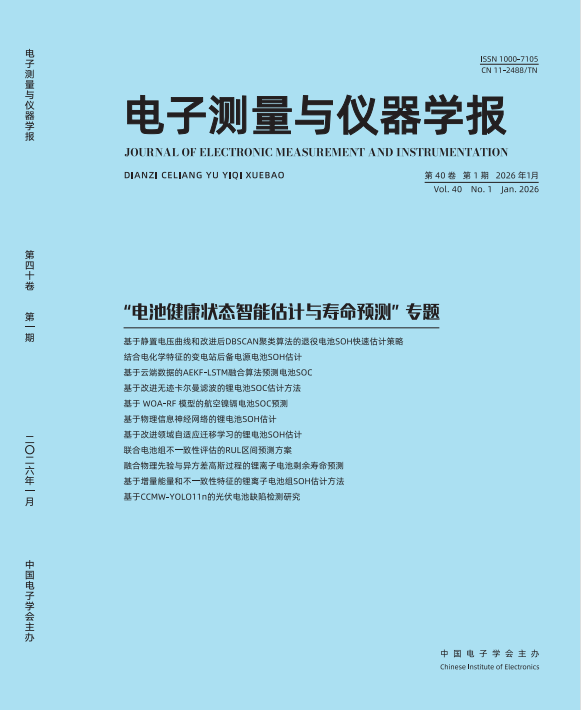
    • Design and detection performance analysis of a mass sensor based on frequency locking phenomenon

      2025, 39(11):82-89.

      Abstract (151) HTML (0) PDF 5.86 M (91) Comment (0) Favorites

      Abstract:To address the dependence of peak frequency on driving amplitude and enhance the frequency stability of nonlinear resonant systems, a novel mass sensor based on the mechanical dual-frequency locking phenomenon has been designed. Initially, a three-degree-of-freedom magnetically coupled model was constructed to theoretically analyze and predict the dynamic behavior of coupled model. Subsequently, the mechanical dual-frequency locking phenomenon was experimentally verified, and the detection principle of the mass sensor was proposed. Additionally, the influence of coupling spacing on the first frequency locking, second frequency locking, detection range, and linearity was investigated. Experimental results demonstrated that the resonant system exhibits relatively stable peak frequencies within two distinct driving voltage intervals. Specifically, the first frequency locking was observed at a driving voltage of 60~105 V, with a stable frequency around 27.18 Hz. The second frequency locking appeared at a driving voltage of 120~150 V, with a stable frequency around 27.61 Hz, and a frequency shift jump of 0.43 Hz occurred between these two stable ranges. The detection of adsorbed mass was achieved by monitoring the first frequency-locking range and the associated unlocking position, combined with the corresponding frequency shift. By appropriately adjusting the coupling spacing, the detection range of the sensor for quality has been increased from 4 mg to 5 mg, and the sensitivity has increased from 0.09 Hz/mg to 0.12 Hz/mg. The conclusions drawn enhanced the peak frequency stability of the sensor and offered a new possibility for mass sensors.

    • System identification and precise drive control of two-dimensional motion stage

      2025, 39(11):90-97.

      Abstract (80) HTML (0) PDF 5.60 M (97) Comment (0) Favorites

      Abstract:To meet the high positioning accuracy requirements of precision measurement and machining, a novel sub-micrometer precision XY two-dimensional motion stage system based on system identification and precision drive control method was designed. The system consists of a mechanical structure and a control system. The mechanical part adopts a stacked structure, with the X-axis motion stage located above the Y-axis motion stage, driven by a linear motor and positioned by a grating sensor. To improve the accuracy and stability of the motion stage, a control design method based on frequency domain system identification for large-stroke two-dimensional motion stage systems was proposed. By inputting sinusoidal excitation signals into the servo system and changing the input signal frequency to obtain frequency characteristics and transfer functions, the control parameters such as Kvi-integral gain, Kvp-proportional gain and Kvfr-feedforward gain were optimized. Thus, the high-precision motion of the two-dimensional motion stage was realized. A series of verification experiments were conducted to evaluate the performance of the positioning system. The results show that the two-dimensional motion stage positioning system has a travel range of 240 mm×240 mm, a repeat positioning accuracy better than 1.5 μm, and a drive resolution of up to 40 nm. The developed submicron two-dimensional motion stage system shows good repeatability and stability, can be applied to high-end equipment fields such as precision machining and precision measurement.

    • Vehicle driving intention recognition method based on vehicle-road-cloud collaborative perception

      2025, 39(11):98-107.

      Abstract (141) HTML (0) PDF 8.54 M (104) Comment (0) Favorites

      Abstract:Accurately recognizing vehicle driving intentions is crucial for autonomous driving. To address the issues of limited perception capabilities in complex traffic scenarios with single-vehicle intelligence, this paper proposes a vehicle driving intention recognition method based on Vehicle-Road-Cloud collaborative perception. First, an overall framework for information exchange is established through Vehicle-Road-Cloud collaborative perception, analyzing the information flow of vehicle-to-vehicle, vehicle-to-road, and road-to-cloud communication. Next, a vehicle intention recognition model is developed by combining Bi-LSTM and the XGBoost algorithm. By integrating the vehicle’s historical trajectory data with the dynamic features of surrounding vehicles, the model enhances the accuracy of driving intention recognition. Finally, the innovative Bi-LSTM bidirectional sequence processing mechanism is introduced, allowing the model to simultaneously capture both forward and backward temporal dependencies, optimizing data processing and improving the model’s robustness in complex traffic scenarios. Testing on the NGSIM dataset shows that, compared to traditional XGBoost and LSTM-XGBoost models, the Bi-LSTM-XGBoost model achieves an overall recognition accuracy of 97.4% in lane-change intention recognition and the model maintains an accuracy of 97.2% under causal constraints. Through co-simulation testing with Sumo and Carla, the impact of varying vehicle numbers on the model’s recognition efficiency is analyzed, with results indicating that the model can recognize driving intentions in realtime within 100 ms. Further testing on a real-world dataset collected from a Vehicle-Road-Cloud collaborative perception system demonstrates that the model meets real-time requirements, exhibits high trajectory prediction capability, and enhances the perception and adaptability of autonomous vehicles in complex scenarios.

    • Research of the distributed multi-vision measurement system based on the ZYNQ MPSOC

      2025, 39(11):108-118.

      Abstract (124) HTML (0) PDF 11.24 M (85) Comment (0) Favorites

      Abstract:With the advantages of high measurement accuracy, fast measurement speed, large measuring range and non-contact skill, the multi-vision measurement system is widely used in aerospace, automotive and other fields of dynamic target space high-precision positioning. However, due to the large amount of image data and the high complexity of matching and reconstruction algorithms, the real-time performance of the system faces the challenge. Therefore, this paper proposes a distributed multi-eye vision measurement System based on the ZYNQ multi-processor system on chip (MPSOC) platform, and optimizes the architecture of algorithms such as image acquisition, marker point matching, and beam method adjustment 3D reconstruction. By means of matrix block processing, constructing task-level pipelines and other methods to reduce computing delay and resource consumption, an efficient system hardware architecture was built and deployed to the ZYNQ MPSOC platform. The experimental results show that the real-time measurement of the spatial position of four or more high-resolution industrial cameras could be up to 42.3 fps at 2 048×2 048×8 bit, and the average reprojection error of the three-dimensional coordinate of the target is better than 0.72 pixels. In the dynamic tracking measurement experiment for the marker point probe, the maximum error of the system in this paper compared with the C-Track optical dynamic tracking measurement system is 129 μm, and the standard deviation is 43 μm, which can meet the high-precision measurement requirements of dynamic targets.

    • Studies on improving a quad-stable stochastic resonance system’s bearing fault diagnosis combined with MOMEDA

      2025, 39(11):119-132.

      Abstract (128) HTML (0) PDF 17.99 M (92) Comment (0) Favorites

      Abstract:Committed to solving the output saturation problem of the classical quad-stable stochastic resonance (CQSR) system, a new type of piecewise unsaturated quad-stable stochastic resonance (PUQSR) system is constructed. Firstly, the anti-saturation characteristic of PUQSR is verified by simulation of experimental signals. Then, the potential function structure variation of the PUQSR system is studied. According to adiabatic approximation theory, the steady-state probability density (SPD) and power spectrum amplification (SA) coefficient of the PUQSR system are deduced theoretically, and the influence of system parameters on them is analyzed in detail. Further, the signal-to-noise ratio improvement (SNRI) and SA are used as indicators to measure system performance, and numerical simulation verifies that the PUQSR system is better at amplifying signals and converting noise energy. At the same time, to extract the target signal more effectively in the context of strong noise, a new MOMEDA-PUQSR system is proposed by combining the multi-point optimal minimum entropy deconvolution (MOMEDA) method and the SR system. Finally, the optimal parameters of the MOMEDA-PUQSR system are found through the autocorrelation function and quantum genetic algorithm and successfully applied to the actual fault signal. The experimental results show that the increased fault signal envelope exhibits more obvious pulse characteristics, and the SNR is increased by 15.404 2~26.077 8 dB compared to the original signal. At the same time, compared with the MOMEDA-CQSR system, the output SNR of the increased signal through the MOMEDA-PUQSR system has been increased by 0.281 5~1.406 3 dB, and the spectral peak has been increased by 480.144~4 314.187 3.

    • Research on ultra-wide band dual notch MIMO antenna based on characteristic mode theory

      2025, 39(11):133-141.

      Abstract (107) HTML (0) PDF 13.93 M (82) Comment (0) Favorites

      Abstract:With the rapid development of wireless communication technology, ultra-wide band (UWB) communication offers advantages such as high transmission rates and large capacity. multiple-input multiple-output (MIMO) technology plays a crucial role in enhancing the performance of communication systems. This paper proposes a microstrip-fed ultra-wideband dual-notch MIMO antenna. By etching semi-elliptical notches on the circular radiating patch, ultra-wideband characteristics are achieved. A U-shaped slot is etched on the radiating patch to suppress interference from the 5G WiFi band (5.125~5.925 GHz), while an inverted U-shaped slot is etched on the feed line to reject interference from the Ku-band downlink standard frequency range (12.2~12.75 GHz). The design is validated and analyzed using characteristic mode theory The antenna consists of two unit antennas placed in parallel. The unit antennas are connected through a shared ground plane, and an L-shaped isolation stub is employed to effectively improve the isolation (|S21|) between the antennas. The antenna dimensions are 60 mm×30 mm×1 mm. Measurement results demonstrate that the antenna achieves an impressive -10 dB operating bandwidth of 3.88~20.49 GHz with a remarkable fractional bandwidth of 136.3%. The MIMO configuration exhibits excellent performance characteristics, including: port isolation greater than 20 dB across the entire operating band, a peak measured gain of 6.1 dB, envelope correlation coefficient (ECC) below 0.02, and diversity gain (DG) exceeding 9.99. These parameters confirm superior diversity performance and radiation characteristics. The proposed design shows significant potential for UWB-MIMO system applications, offering promising prospects for advancing wireless communication technologies and fostering innovation in this field.

    • Remaining useful life prediction for aircraft engine based on MTCN and dual attention

      2025, 39(11):142-151.

      Abstract (73) HTML (0) PDF 13.01 M (85) Comment (0) Favorites

      Abstract:Current aircraft engine remaining useful life prediction methods often rely on a holistic analysis of multi-source sensor data, typically using a single time scale or focusing on spatial features, which neglects key differences in sensor data at different time points. To address these limitations, a novel multi-scale temporal convolutional network (MTCN) is proposed to comprehensively extract both long-term and short-term temporal features from multi-source sensor data. Additionally, a dual attention mechanism, integrating channel attention and self-attention, is designed to enhance spatial feature representation and selectively focus on critical sensor measurements at key time points. The collaborative integration of MTCN and the dual attention mechanism facilitates effective spatiotemporal feature fusion, improving the model’s capacity to capture complex degradation patterns. Moreover, the Gaussian error linear unit (GeLU) activation function is employed to enhance the network’s nonlinear fitting capability. Experimental evaluations conducted on the NASA C-MAPSS benchmark dataset demonstrate that the proposed method significantly outperforms state-of-the-art approaches, achieving average reductions of 7% in root mean square error (RMSE) and 13.1% in Score, thereby verifying its superior prediction accuracy and robustness.

    • Co-design of laser chaotic system and anti-attack image encryption algorithm

      2025, 39(11):152-160.

      Abstract (105) HTML (0) PDF 15.55 M (88) Comment (0) Favorites

      Abstract:Based on the classical Lorenz-Haken chaotic system, a four-dimensional laser chaotic system is constructed, and its nonlinear dynamical characteristics are theoretically analyzed and numerically verified. Through multi-dimensional analytical methods, including Lyapunov exponent spectra, bifurcation diagrams, and Poincar sections, the equilibrium point stability, nonlinear evolution mechanisms, and multi-stability coexistence characteristics of the chaotic system are systematically revealed. Based on phase space reconstruction and attractor dimension calculations, the complex dynamical behaviors of the system’s attractor are quantitatively characterized, revealing the symmetric dual-vortex chaotic attractor. To bridge the theoretical model with physical implementation, an equivalent analog circuit is designed and experimentally validated, demonstrating high consistency between the circuit output signals and numerical simulation results. Building on this foundation, a three-stage color image encryption algorithm combining position scrambling, dynamic DNA encoding, and reverse cascaded diffusion is proposed. The results show that the encrypted image achieves an information entropy of 7.999 4, adjacent pixel correlation coefficients below 0.003, and a uniform histogram distribution, demonstrating strong resistance to cropping and noise attacks. Theoretical analysis and experimental verification confirm that the system meets the requirements for information security in terms of chaotic characteristics and anti-attack capabilities, providing a new implementation scheme for optical communication encryption technologies.

    • Fault diagnosis of rotating machinery based on dilated convolution and improved BKA-LSSVM

      2025, 39(11):161-174.

      Abstract (74) HTML (0) PDF 16.63 M (107) Comment (0) Favorites

      Abstract:Bearings and gears are crucial components in mechanical transmission systems, and their fault diagnosis is of great significance for ensuring the safe operation of equipment. To effectively extract the features of rotating machinery fault signals and solve the problem of strong dependence of classifiers on feature extraction, this paper proposes a fault diagnosis model based on dilated convolution and improved black winged kite optimized least squares support vector machine (BKA-LSSVM). Firstly, the one-dimensional vibration signal is transformed into a two-dimensional time-frequency image with high-resolution time-frequency representation using synchronous compression wavelet transform. Secondly, a multi-scale cascaded dilated convolution module is constructed, and the dilation rate adjustment mechanism is used to achieve hierarchical and multi granularity extraction of fault features, effectively capturing fault mode features at different scales. The results of the fully connected layer are used as inputs to the BKA-LSSVM classification layer, and a nonlinear growth model is introduced to dynamically adjust the disturbance coefficient. A random search mechanism is constructed to improve the BKA. Finally, the improved BKA is used to optimize the parameters of LSSVM to improve the classification accuracy of the model. Validation was conducted on two datasets, and the experimental results showed that the proposed model had an accuracy rate of over 87% when the sample size was 10, and an accuracy rate of over 95% when the signal-to-noise ratio was -4. This validates that the proposed model has stronger noise resistance and generalization performance compared to the comparison model.

    • Lightweight road damage detection algorithm based on multi-scale feature fusion

      2025, 39(11):175-184.

      Abstract (94) HTML (0) PDF 9.84 M (97) Comment (0) Favorites

      Abstract:In order to improve the current road damage detection methods in complex environment detection difficulties, serious detail texture loss, low efficiency, a multi-scale feature fusion lightweight YOLO (MSL-YOLO) method is proposed. Firstly, based on the improvement of YOLO11n, the Feature fusion channel attention (FFCA) module is designed to improve the weight of damage information, strengthen the extraction of feature information, and reduce redundant information. In order to better capture damage targets of different sizes in complex environments, a multi-scale feature enhancement (MSFE) module is designed to enhance the multi-scale feature fusion capability of the model and further improve the detection performance. In order to realize the Lightweight model and real-time detection, lightweight network (LNet) is introduced in Neck to reduce the computational complexity of the model and facilitate the deployment and application of the model. The experimental results show that on the RDD2022 road crack dataset, the proposed method has an average detection accuracy of 52.5%, and the number of model parameters is 2.3×10⁶, which is 1.8% higher than that of YOLO11n algorithm, and the number of parameters is 11.5% lower. It can not only meet the requirements of high precision, high speed and lightweight for road damage detection, but also has strong robustness and real-time.

    • The algorithm for detecting abnormal behaviors of elevator passengers with improved YOLOv11

      2025, 39(11):185-195.

      Abstract (104) HTML (0) PDF 26.62 M (102) Comment (0) Favorites

      Abstract:In response to the safety risks associated with abnormal passenger behavior in elevators, an enhanced anomaly detection model, YOLO_LP, based on YOLOv11, is proposed. First, a novel feature extraction component, CSP-PTM, is incorporated into the backbone network. This component enables powerful local and global feature extraction, significantly improving the model’s detection accuracy. Next, a contextual information fusion module is introduced to enhance the feature pyramid network. This approach reorganizes feature information through a weighting mechanism, effectively improving the discriminative capability of the feature maps. Additionally, the wise intersection over union loss (WIoU) function is employed to address class and size imbalances, further enhancing the model’s accuracy and convergence speed. Finally, a newly designed LDH detection head replaces the original, resulting in a lightweight network model. Experimental results demonstrate that the improved model achieves an accuracy of 90.4% in detecting abnormal passenger behavior in elevators, 3.5% higher than the baseline model. Furthermore, compared to the YOLOv11n model, it shows improvements of 2.9% and 2.1% in mAP@0.5 and mAP@0.5:0.95, respectively, while reducing the number of parameters and computational load by 10% and 17%, respectively. These findings highlight the superior performance of the YOLO_LP model, which meets the accuracy and speed requirements for abnormal behavior detection in elevator cabins.

    • Infrared human target detection by improved single shot mulitibox detector

      2025, 39(11):196-202.

      Abstract (66) HTML (0) PDF 4.66 M (78) Comment (0) Favorites

      Abstract:To address the issue of high computational complexity in the single shot multibox detector (SSD) model and its poor robustness in handling small targets and occlusions, an improved SSD-based infrared human target detection method is proposed to meet the real-time requirements of intelligent surveillance. First, MobileNet V2 is used as the backbone feature extraction network, replacing the traditional visual geometry group network 16(VGG16)network in SSD, which reduces computational cost through depthwise separable convolutions. Then, a feature pyramid network (FPN) structure is introduced to achieve multi-scale feature fusion, enhancing the representation ability of shallow features. Finally, the squeeze-and-excitation (SE) channel attention mechanism is incorporated to dynamically learn the channel weights, focusing on key features and improving the model’s attention to important channel information. Experimental results on the self-built IR-HD dataset show that the improved SSD model’s detection accuracy is increased by 1.3%@AP0.5 and 14.3%AP@0.75, while the model’s inference speed improves by 3.835 fps. The conclusion indicates that this method, through lightweight design, feature fusion, and attention mechanism collaboration, significantly enhances both detection accuracy and real-time performance, demonstrating strong robustness in infrared small target and occlusion scenarios.

    • Fault diagnosis method of aircraft transformer rectifier unit based on improved SDAE-GATransformer

      2025, 39(11):203-213.

      Abstract (95) HTML (0) PDF 6.89 M (87) Comment (0) Favorites

      Abstract:The transformer rectifier unit (TRU) is one of the key power conversion devices in the secondary power supply system of an airplane. During the operation of the TRU, it is susceptible to temperature and humidity variations and load fluctuations, leading to corresponding failures of its components, which reduces the reliability of the equipment and then affects the safety of flight. In view of the problem that TRU hardware has many fault categories and similar fault data characteristics, a fault diagnosis method based on stacked denoising auto encoder (SDAE) combined with genetic algorithm (GA) to optimize the Transformer is proposed. The following is an example of the optimization of Transformer’s fault diagnosis method. First, the collected fault data are normalized; second, the contrastive center loss (CCL) function is introduced in the training phase of SDAE to learn the optimal classification features in the layer-by-layer nonlinear mapping of SDAE by using the sample label information, so as to realize the reduction of the distance within classes and the expansion of the distance between classes. At the same time, the CCL and reconstructing cost losses (RCL) function are jointly optimized to obtain the improved SDAE-based feature extraction module, which realizes the feature pre-extraction of the original fault data; in order to further extract the feature information and diagnose the problem, the diagnostic module of the GA-optimized Transformer is constructed to improve the accuracy of fault detection. Finally, Simulink is utilized to simulate the fault data to compare with the existing diagnostic methods. The results show that the proposed method can better realize the diagnosis of 101 kinds of faults, with an accuracy rate of 96.05% and good noise resistance.

    • Image dehazing based on error feedback and haze aware

      2025, 39(11):214-223.

      Abstract (69) HTML (0) PDF 20.42 M (75) Comment (0) Favorites

      Abstract:Images captured in haze are often affected by contrast reduction, detail degradation, or color distortion, which significantly impair visual quality and affect the performance of high-level vision tasks. To effectively remove the haze from images, a multi-scale dense residual dehazing network (MDRD-Net) based on error feedback is proposed. In this network, error feedback modules (EFM) are symmetrically introduced in the encoding and decoding paths to compensate for the information loss caused by downsampling. Dense connections are introduced between error feedback modules to enhance information interaction between non-adjacent layers. To make the network focus on regions with thick haze and rich details, multiple haze aware modules (HAM) are cascaded in the feature extraction stage. Additionally, an attention mechanism is introduced in the skip connections to adaptively fuse the features from the encoder and decoder to overcome the semantic gap between deep and shallow features. Extensive experiments on the RESIDE public dataset demonstrate that the proposed method can effectively remove the haze interference and obtain clear images with true colors, high contrast, and rich details. The results, both quantitatively and qualitatively, show a significant improvement over those of many existing state-of-the-art methods.

    • Cooperative tracking control of the multiple-high-speed trains system using adaptive artificial potential function

      2025, 39(11):224-233.

      Abstract (68) HTML (0) PDF 5.65 M (74) Comment (0) Favorites

      Abstract:Ensuring the speed consistency and tracking interval safety in the cooperative control of high-speed train group is very important to improve the operational efficiency and operational safety of railroads. Focusing on the demand for more efficient and safe operation, this paper firstly establishes a dynamic model of high-speed trains based on the virtual coupling mechanism of multi-train cooperation, and constructs the communication topology of the train group by using the algebraic graph theory; secondly, a multi-train cooperative tracking control strategy based on adaptive artificial potential function is designed. For the safety spacing constraint problem, a potential function with adjusting ability is designed to transform the relative position error into a dynamic compensation quantity in the potential gradient field; finally, the artificial potential field method is integrated with the fuzzy theory, and the strength coefficients of the potential field are dynamically corrected by the fuzzy affiliation function, so that the system can dynamically manage the deviation of the actual spacing of trains and the desired spacing under the stable operation state, and flexibly adjust the safety spacing according to the actual control demand. The spacing is flexibly adjusted according to the actual control requirements. Through simulation verification, the scheme has significant advantages in control accuracy, and the proposed tracking control strategy can ensure that each high-speed train operates at the required speed and tracks the previous train under the ideal distance range, and the error is controlled within -0.12~0.21 km, which enhances the efficiency of the railroad operation and better adapts to the complex operating environment.

    • Research on depth feature diagnosis of convention and combustion perspectives with intake or exhaust blockage for aero piston engine

      2025, 39(11):234-245.

      Abstract (97) HTML (0) PDF 11.77 M (87) Comment (0) Favorites

      Abstract:To address the performance degradation problem of aero piston engine caused by different blockage degrees of intake and exhaust, a two-channel deep perspective feature fusion diagnostic model based on conventional intake or exhaust and cylinder combustion data was designed. So the self-attention (SA) mechanism was introduced into the combustion perspective channel of the constructed two-channel deep convolutional neural network (DCNN) diagnostic architecture, which enhanced the ability to extract combustion features. By setting five health levels of different degrees for intake or exhaust blockage, a performance degradation dataset was obtained for the ground bench tests at the altitude of 1 920 m and engine AMESim+Simulink joint simulations, including two typical operating conditions: takeoff and cruise. Using the takeoff condition at a propeller speed of 2 300 r/min as a study case, the trend analysis of cylinder pressure changed with different blockage degrees of intake or exhaust, the t-SNE depth feature distribution and classification diagnosis analysis of each network layer were carried out. And the rationality of the diagnostic architecture was further verified by the model component ablation experiment. The results showed that the two-channel diagnostic model of self-attention and deep convolutional neural network (SA-DCNN) for cases of intake or exhaust blockage on aero piston engine achieved an average accuracy of 98.95% and 98.62% on five levels of health diagnosis, respectively indicating that the diagnostic model had high accuracy.

    • Endoscopic polyp detection based on lightweight improved RT-DETR

      2025, 39(11):246-257.

      Abstract (117) HTML (0) PDF 19.56 M (93) Comment (0) Favorites

      Abstract:Aiming at the problems of significant differences in polyp size, complex intestinal environment, and limited medical diagnostic equipment resources affecting detection accuracy in polyp detection tasks, a lightweight polyp detection model based on RT-DETR improvement was proposed. Firstly, FasterNet is used as the backbone network of the RT-DETR model to reconstruct the FasterNet Block module to divert redundant features while increasing attention to polyps. Secondly, the new module is designed to introduce HiLo high and low frequency separation mechanism into the attention-based intrascale feature interaction (AIFI) to separate local high frequency details and low frequency global structures, and focus on key lesions in complex backgrounds. Finally, an SBA-FPN recalibration feature fusion network is designed to replace the cross-scale feature fusion module (CCFM) to promote two-way fusion between features with different resolutions and improve the multi-scale feature fusion effect. The experimental results show that compared with the original RT-DETR model, the mAP@0.5 and mAP@0.5:0.95 values of the improved model are increased by 2.3% and 3.0% respectively, and the amount of parameters and calculations is reduced by 44.4% and 48.6% respectively. On the Br35H brain tumor dataset, the mAP@0.5 of the improved model increased by 1.3%. It can be seen that the improved model not only meets the needs of automatic polyp detection, but also meets the high-precision detection of generalized lesions in medical scenarios.

    • Research on IPCNN series fault arc detection based on fusion transfer learning

      2025, 39(11):258-272.

      Abstract (98) HTML (0) PDF 17.80 M (98) Comment (0) Favorites

      Abstract:In the actual home environment, it is difficult to collect fault data for household loads, resulting in the scarcity of fault samples and the inability to meet the training requirements of the fault model. In this paper, an IPCNN series fault arc detection method based on transfer learning was proposed. Firstly, an experimental platform for series arc faults of household loads was built to obtain the one-dimensional voltage signals of inductive loads and resistive loads in series faults, and converted them into two-dimensional images by using the Gragram angle field to form a new image dataset and send it to the PCNN model on the source domain for training to obtain the weight parameters of the model. Then, the trained weight parameters on the source domain are migrated to the IPCNN model on the target domain through transfer learning, which accelerates the model training time and saves computing resources. At the same time, GRU and MSA are added to the IPCNN model to improve the computational efficiency and expressive ability of the model, and the classification layer in the PCNN model is discarded, and the L2-SVM is used instead of the Softmax layer to control the complexity of the classification task in the IPCNN model, so as to improve the generalization ability of the model. Finally, in order to solve the problem that the learning rate and the number of neurons in the model are difficult to determine, the improved artificial lemming algorithm is used to optimize the network structure more reasonable. Through comparative experiments, the average recognition accuracy of the model for inductive and resistive loads is 97% and 97.75%, respectively. It is proved that the proposed method overcomes the problem of low model recognition accuracy in the case of data scarcity, and has good results in the identification of series arc faults of household loads.

Editor in chief:Prof. Peng Xiyuan

Edited and Published by:Journal of Electronic Measurement and Instrumentation

International standard number:ISSN 1000-7105

Unified domestic issue:CN 11-2488/TN

Domestic postal code:80-403

  • Most Read
  • Most Cited
  • Most Downloaded
Press search
Search term
From To